From the day that your fathers left the land of Egypt even to this day, I have sent you untiringly all my servants the prophets. Yet they have not obeyed me nor paid heed; they have stiffened their necks and done worse than their fathers. When you speak all these words to them, they will not listen to you either; when you call to them, they will not answer you. Say to them: This is the nation that does not listen to the voice of the LORD, its God, or take correction. Faithfulness has disappeared; the word itself is banished from their speech. (Jeremiah 7:23-28)
Human beings don’t respond well to God, our pessimistic reading today from Jeremiah says. Nor will people listen to you when you speak to them, God says to the prophet. It’s like that since they came from Egypt. It’s like that today.
In Luke’s Gospel, also read today, Jesus is dismissed as a devil by some in the crowd as he gives a mute person power to speak. By the devil’s power he does this, they say. It’s not the only time it happens. From the beginning of his ministry at Nazareth, Luke’s Gospel read Monday this week reminds us, Jesus was dismissed by his own people
They are not the only ones slow to believe. Naaman the Syrian was ready to go home after they told him his leprosy could be cured by going into the Jordan. It’s only a trickle of a river, he says. He looks for something bigger.
“How slow you are to believe,” Jesus said to the disciples on the way to Emmaus . The same can be said of us.
Yet, the mercy of God is stronger than our unbelief, our Lenten readings say. Jesus continues on to Jerusalem, no matter how unbelieving his own people at Nazareth are, or the people of Caphernaum, or the leaders of his people, or the crowds in other cities where he taught and worked wonders , or his own disciples, or outsiders like Naaman –or we are.
No matter how strong human unbelief, Jesus makes his way to Jerusalem, proclaiming the mercy and love of God to a people slow to believe. So we stay close to him and listen to his word.
“If today you hear his voice, harden not your hearts” our responsory says today. Even today, he speaks in an unbelieving world.
Dear brothers and sisters, good morning and welcome!
Continuing in our reflection on the Dogmatic Constitution Lumen gentium (LG), today we will look at the second chapter, dedicated to the People of God.
God, who created the world and humanity, and who wishes to save every man, carries out his work of salvation in history, choosing a real people and dwelling among them. For this reason, He calls Abraham and promises him descendants as numerous as the stars in the sky and the sand on the seashore (cf. Gen 22:17-18). With Abraham’s children, after freeing them from slavery, God makes a covenant with them, accompanies them, cares for them, and gathers them together whenever they stray. Therefore, the identity of this people is given by God’s action and by faith in Him. They are called to become a light for other nations, like a beacon that will draw all peoples, the whole of humanity, to itself (cf. Is 2:1-5).
The Council affirms that “All these things, however, were done by way of preparation and as a figure of that new and perfect covenant, which was to be ratified in Christ, and of that fuller revelation which was to be given through the Word of God Himself made flesh” ( LG, 9). Indeed, it is Christ who, in giving His Body and His Blood, unites this people in Himself and in a definitive way. It is a people now made up of members of every nation; it is united by faith in Him, by adherence to Him, by living the same life as Him, animated by the Spirit of the Risen One. This is the Church: the people of God who draw their existence from the body of Christ [1] and who are themselves the body of Christ; [2] not a people like any other, but the People of God, called together by Him and made up of women and men from all the peoples of the earth. Its unifying principle is not a language, a culture, an ethnicity, but faith in Christ: the Church is therefore – according to a splendid expression of the Council – the assembly of “all those who in faith look upon Jesus” ( LG, 9).
It is a messianic people, precisely because it has Christ, the Messiah, as its head. Those who belong to it do not pride themselves on merits or titles, but only on the gift of being, in Christ and through Him, daughters and sons of God. Above any task or function, therefore, what really matters in the Church is to be grafted onto Christ, to be children of God by grace. This is also the only honorary title we should seek as Christians. We are in the Church in order to receive life from the Father unceasingly and to live as His children and brothers and sisters among ourselves. Consequently, the law that animates relationships in the Church is love, as we receive and experience it in Jesus; and her goal is the Kingdom of God, towards which she walks together with all humanity.
Unified in Christ, Lord and Saviour of every man and woman, the Church can never turn inwards on herself, but is open to everyone and is for everyone. If believers in Christ belong to it, the Council reminds us that “All men are called to belong to the new people of God. Wherefore this people, remaining one and unique, must extend to the whole world and to all ages, so that the intention of God’s will may be fulfilled, who in the beginning created human nature as one and wants to gather together his children who were scattered” (LG, 13). Even those who have not yet received the Gospel are therefore, in some way, oriented towards the people of God, and the Church, cooperating in Christ’s mission, is called upon to spread the Gospel everywhere and to everyone (cf. LG 17), so that every person may enter into contact with Christ. This means that in the Church there is, and there must be, a place for everyone, and that every Christian is called to proclaim the Gospel and bear witness in every environment in which he or she lives and works. Thus, this people shows its catholicity, welcoming the wealth and resources of different cultures and, at the same time, offering them the newness of the Gospel to purify them and to raise them up (cf. LG, 13).
In this regard, the Church is one but includes everyone. A great theologian described it thus: “The unique Ark of Salvation must welcome all human diversity into its vast nave. The only banquet hall, the food it distributes is drawn from all of creation. The seamless garment of Christ, it is also – and it is the same thing – the garment of Joseph, with its many colours”. [3]
It is a great sign of hope – especially in our times, traversed by so many conflicts and wars – to know that the Church is a people in which women and men of different nationalities, languages and cultures live together in faith: it is a sign placed in the very heart of humanity, a reminder and prophecy of that unity and peace to which God the Father calls all his children.
“Amen, I say to you, until heaven and earth pass away, not the smallest letter or the smallest part of a letter will pass from the law, until all things have taken place. Therefore, whoever breaks one of the least of these commandments and teaches others to do so will be called least in the Kingdom of heaven. But whoever obeys and teaches these commandments will be called greatest in the Kingdom of heaven.” (Matthew 5:17-19)
We often hear the Sermon on the Mount during the days of Lent. Let’s listen carefully to Jesus’ words on the mountain today. Before him, Moses spoke God’s word to the Israelites from a high mountain. Now, Jesus teaches God’s word as Moses did. He does not abolish what the great patriarch taught; he brings it to fulfillment.
Sublime promises are made here, our God is gracious and near. But we are reminded that sublime things are reached by small steps. We must keep the “least commandments,” to enter the Kingdom of heaven. Lent is a time for remembering that small things like a cup of cold water, a visit to the sick, feeding someone hungry, clothing someone naked, speaking a “word to the weary to rouse them” are important commandments of God.
Lent is a time for remembering small things. Yes, lent calls us to think great thoughts and embrace great visions of faith. But the law of God often comes down to small things, and the greatest in the kingdom of God are the best at seeing them.
“The most important things for you are: humility of heart, patience, meekness, charity toward all, and seeing in your neighbor an image of God and loving him in God and for God.” ( St. Paul of the Cross, Letter 1114)
What small step do you want me to take today, O Lord? Help me see what’s right before me. There’s a neighbor before me now, made in your image. What small gift can I give?
This 3rd week of Lent is an important week for people entering our church and participating in its sacraments. It’s a school for catechumens seeking Baptism; others are receiving sacraments. Three readings this week are especially important: the story of the Samaritan woman, the story of Naaman the Syrian, and then, Luke’s account of Jesus visit to Nazareth.
The Samaritan woman, who meets Jesus at Jacob’s well, is an important teacher for those approaching the church and its sacraments. It’s a story so important that the liturgy recommends this gospel be read in place of another gospel this week, if it’s not read on Sunday.
Like the Samaritan woman, we are people of our own time and place, with our prejudices and deep desires. Like her, Jesus leads us gradually to a new understanding of who we are and what we are called to be. Like her, he promises us living water.
What does “living water” mean? Baptize in living waters, the early baptismal rituals say. They forbid baptism in stagnant water. Why? Stagnant water goes nowhere. Living water brings us to all life, to all creation, to a greater life. It’s not a water that restricts; this water makes us grow.
For the Jews the Jordan River was living water. Entering the Jordan at his baptism Jesus empowered it with new life. His Spirit entered the waters. Just as water once flowed out in four rivers over the whole world – according to the Book of Genesis – the waters of the Jordan flowed out over the world after Jesus was baptized.
Monday’s reading recalls Naaman the Syrian. Like the Samaritan woman, he was not a Jew. He came somewhat skeptically to the waters of the Jordan to be cleansed of his leprosy. Not only was he cleansed of leprosy, but he came to new knowledge: “Now I know that there is no God in all the earth, except in Israel.” Like the Samaritan woman, Naaman received the gift of faith.
The stories of Naaman and the Samaritan woman are great stories for reflecting on the mystery of the church, baptism and the sacraments.
Why do we catechize and baptize people entering the church and her sacramental life during Lent? Because Lent leads to the mystery of the death and resurrection of Jesus. Living water came from his side at his death. Blood and water from his side gave life to the Church and her sacraments.
During this third week of Lent, the gospel of the rejection of Jesus at Nazareth is also read. (Monday) The story is important because it presents “the scandal of the Incarnation.” Jesus was rejected at Nazareth as the carpenter, Mary’s son. Those who enter the church and participate in her sacraments will face a similar “ scandal of the Incarnation.”
The church is a complex reality, Pope Leo said in a recent address, it is a reality of saints and sinners. We have to live in that reality.
In Today’s lenten reading Peter’s question about forgiveness (“How many times must I forgive my brother?”) isn’t just his question. It’s a question we all ask.
Jesus answers that we should forgive as God forgives–beyond measure –and he offers a parable about two servants who owe money (a big reason people fight among themselves). The first servant owes his master five thousand talents, a huge sum. His master forgives the entire debt In an unexpected display of mercy.
After being forgiven so much, however, that servant sends off to debtors prison another servant who owes him a few denarii, a mere pittance compared to his debt of ten thousand talents. He won’t forgive this small thing.
Now, isn’t the reason we don’t forgive others often just as small? So many grievances and grudges people have against one another are based on small slights they receive, real or imagined. And the small slights never stop. They’re constant and they need constant forgiveness.
In this holy season, we look at God’s immeasurable forgiveness found in the passion and death of Jesus and learn from him. “Father, forgive them for they know not what they do.” Seeing God’s forgiveness, the saints say, helps us to forgive. He’s forgiven us so much. Shouldn’t we forgive too?
We need to keep the example of Jesus always in mind, especially the example he gave from the Cross. The founder of my community always recommended that: “Always bring to prayer some mystery of the life and passion of Jesus Christ. If then, the Holy Spirit draws you into deeper recollection, follow the breath of the Spirit, but always by means of the Passion. You will thus avoid all illusion.” ( St.Paul of the Cross, Letter 791)
How many times must I forgive today, Lord, how many times must I be patient, kind, understanding, willing to carry on even if no one sees or cares? How many times did you? Bless me with the graces of your passion and death.
Luke’s Gospel begins the ministry of Jesus with his rejection in his hometown of Nazareth. Rejection is an important part of the mystery of his death and resurrection. Jesus lived most of his life in Nazareth among “his own.” (Luke 4,24-30) Yet, as he begins his ministry he is rejected by ” his own” in their synagogue, a rejection Jesus must have carried with him; how could he forget it?
Crowds welcoming him to Jerusalem on Palm Sunday call him “the prophet Jesus from Nazareth in Galilee,” but not many from Nazareth accompanied him there. Some women from Galilee, most importantly his mother Mary, stand by his cross as he dies. Still, Jesus didn’t find much acceptance in Nazareth.. “He came to his own and his own received him not.”
The people of Nazareth reject Jesus because they see him as “the carpenter’s son.” He seems too small to be entrusted to a large mission. Our first reading, recalling the cure of the Syrian general Naaman, sees a humble Jewish servant girl as God’s instrument. Jesus takes the “form of a slave” to fulfill God’s plan.
The Cross on Calvary draws attention to the physical sufferings of Jesus in his passion–the scourging, the thorns, the crucifixion. But let’s not forget his interior sufferings, especially rejection from “his own, who knew him from the beginning and counted him too small. Only a few from Nazareth followed him to Jerusalem.
The lenten gospels tell us rejection doesn’t stop God’s mercy and love. On Calvary Jesus shows God’s love in his outstretched arms, arms outstretched even towards Nazareth.
We share in the great mystery of his death and resurrection. We may never be nailed to a cross as he was, but there are other ways to bear a cross. Rejection by “our own,” perhaps someone close to us, or perhaps its the world we live in, where we don’t fit in? There are more than one way we share in the sufferings of Jesus.
Lord, help me face the slights the come from those close by, from my Nazareth, from “my own.” The mystery of your Cross is not played out on Calvary alone, It’s played out in places and people close by, where we live now. Give me the grace to live in my Nazareth as you did in yours.
The story of Naaman the Syrian, which we read this week, is filled with interesting lessons. A little Jewish slave girl brings the great general with leprosy to Israel. She’s a wonderful apostle. Israel’s king terrified about the political consequences of the visit is a good example of how a political viewpoint can blind you to everything else. Good story for these days, immersed as we are in politics.
God works in sacraments that appear so small. Naaman was told to go and wash seven times in the Jordan. He didn’t think much of the waters of the Jordan, but they cured him.
Our lectionary reading omitted part of the story I like. Returning to the Prophet Elisha after he’s cured, Naaman wants to shower the prophet with gifts. The prophet won’t take anything. “Naaman said: “If you will not accept, please let me, your servant, have two mule-loads of earth, for your servant will no longer make burnt offerings or sacrifices to any other god except the LORD.”
“Two mule-loads of earth.” The Empress Helena brought earth from the site of Calvary to the church of the Holy Cross in Rome in the 4th century when she brought relics of the cross to be honored there. The earth is still there.
We’ve placed rocks from many countries of the world in our Mary Garden at the foot of the statue of Mary and her Child. (Above)
Earth itself is holy. So simple it can be ignored. Yet all life depends on 6 inches of soil. Of all the memorabilia Naaman could have taken from Israel, he took two mule-loads of earth. He learned to appreciate the gifts of God that appear so small. He got it right.
The story of the prodigal son is one of the longest in the gospel, but it’s also one of the most important. It’s not just about one boy who goes astray, of course, it’s about the whole human race. All of us are the subject of this story.
“Give me what’s mine,” the son says boldly to his father. We all tend to say that. And the boy takes off for a faraway country, a permissive paradise that promises power and pleasure, in fact, it promises him everything; he can do anything he wants.
But they’re empty promises, and so the boy who had so much ends up with nothing, in a pigsty feeding pigs, and they eat better than he does.
Then, he takes his first step back. He “comes to himself,” our story says; he realizes what he has done. “I have sinned.”
How straightforward that reaction! Not blaming anybody else for the mess he is in: not his father, or the prostitutes he spent so much of his money on, or the society that fooled him. No, he takes responsibility. That “coming to himself” was the first gift of God’s mercy.
He doesn’t wallow in his disappointment and his sins and his failures and what they’ve brought him. They don’t trap him. He looks beyond them to the place where he belongs, his father’s house. It wont be an easy road, but he starts back home.
There he’s surprised by the welcome he receives. More than he ever expected. The father takes into his arms and calls for feast.
This is our story too. The story of God’s mercy. Let’s ask for the gift to know ourselves. Let ask for the gift to keep going to our father’s house. Let’s ask for the gift to know God’s embrace, God’s warm embrace. The embrace of his love.
Our first reading from the Prophet Micah reminds us that nations stray as well as individuals. Let’s not forget God’s mercy falls on the world as well as each person. We pray too for a world that can wander far from God.
How easily we leave your side, Lord God, for a place far away. Send light into our darkness, and open our eyes to our sins. Unless you give us new hearts and strong spirits, we cannot make the journey home, to your welcoming arms and the music and the dancing. Father of mercies and giver of all gifts, guide us home and lead us back to you.


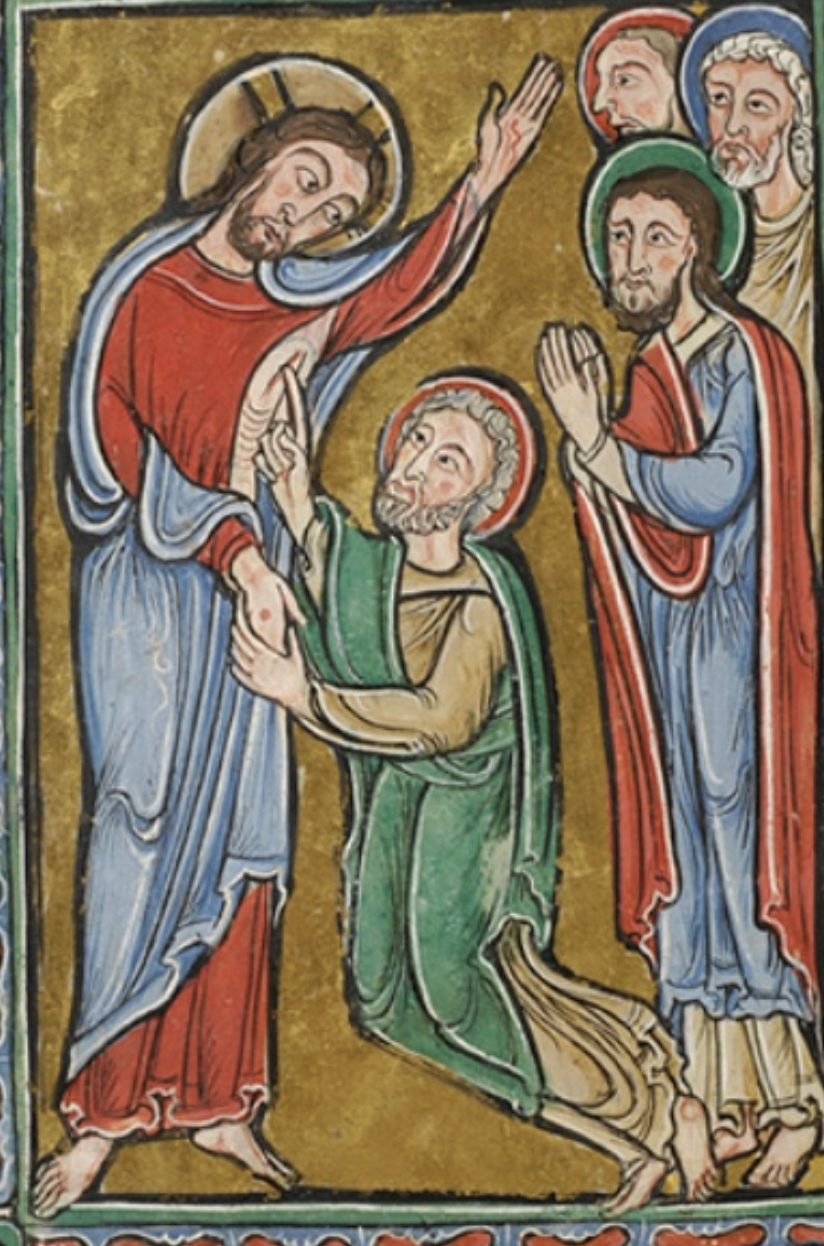


 The Victor's Place